Classic Quilts
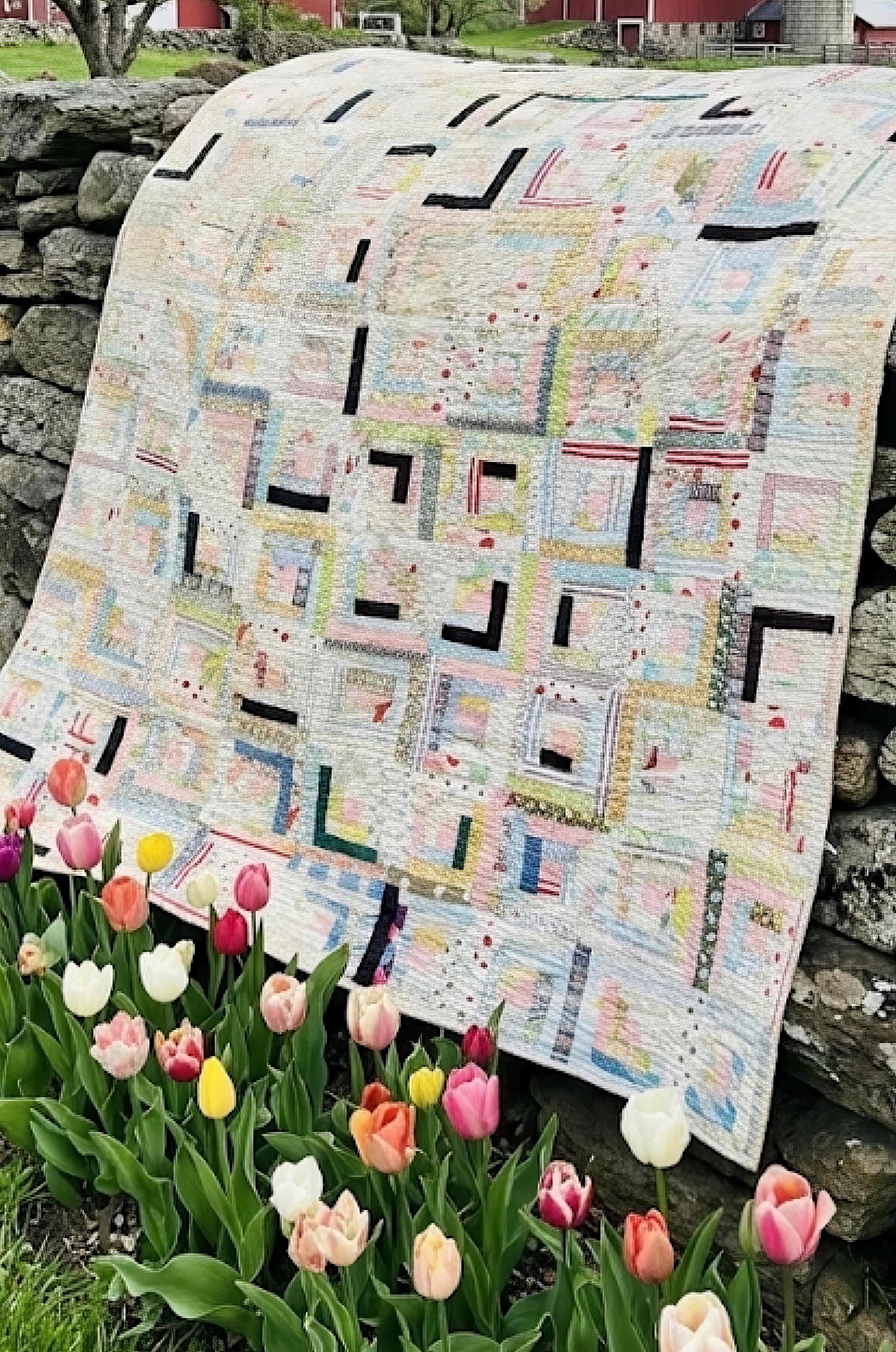
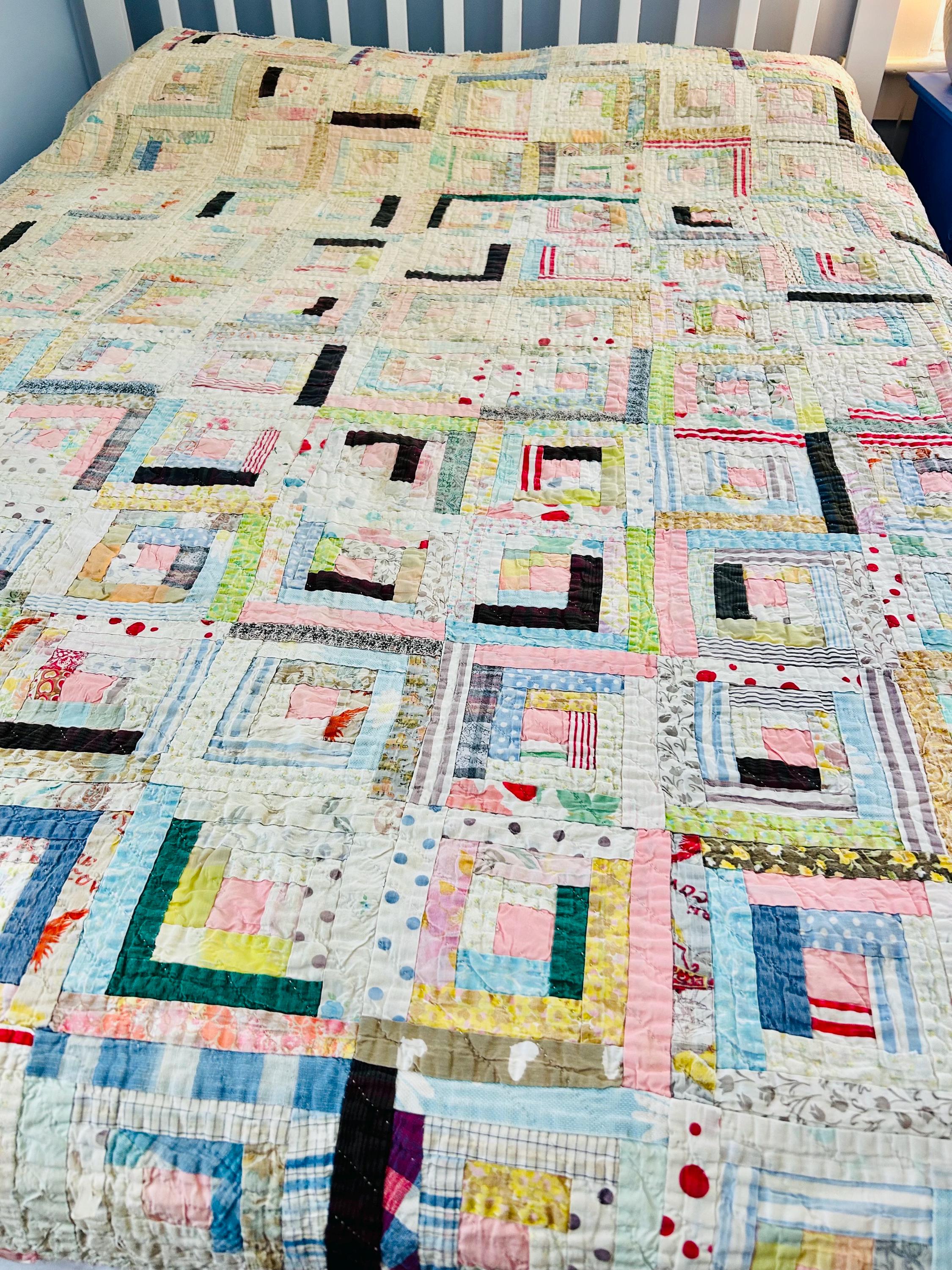
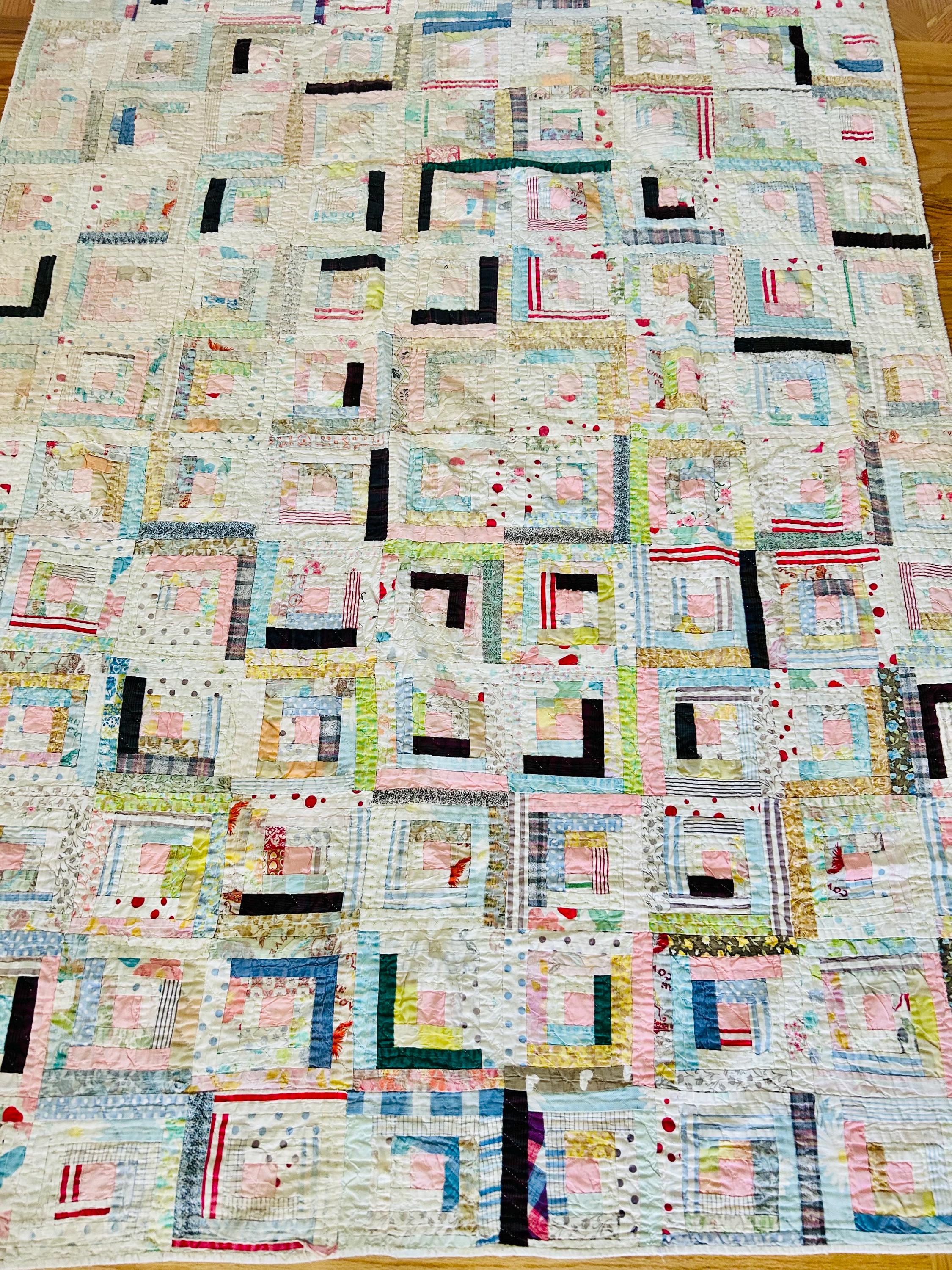
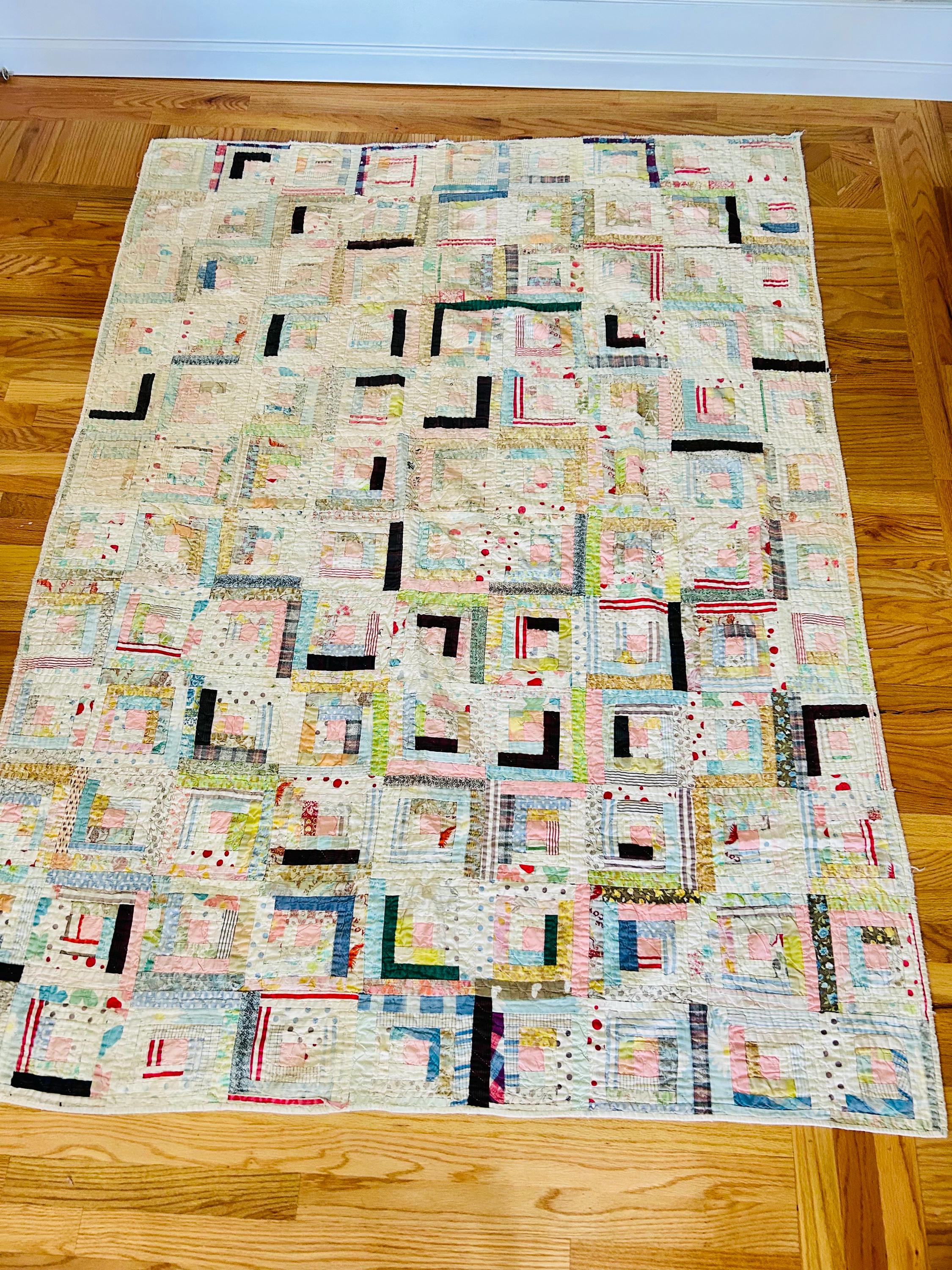
Antique 1930s–1940s Log Cabin Barn Raising Quilt | Timeworn Pastel Feed Sack Fabrics | 60” x 80”
$179.00
-
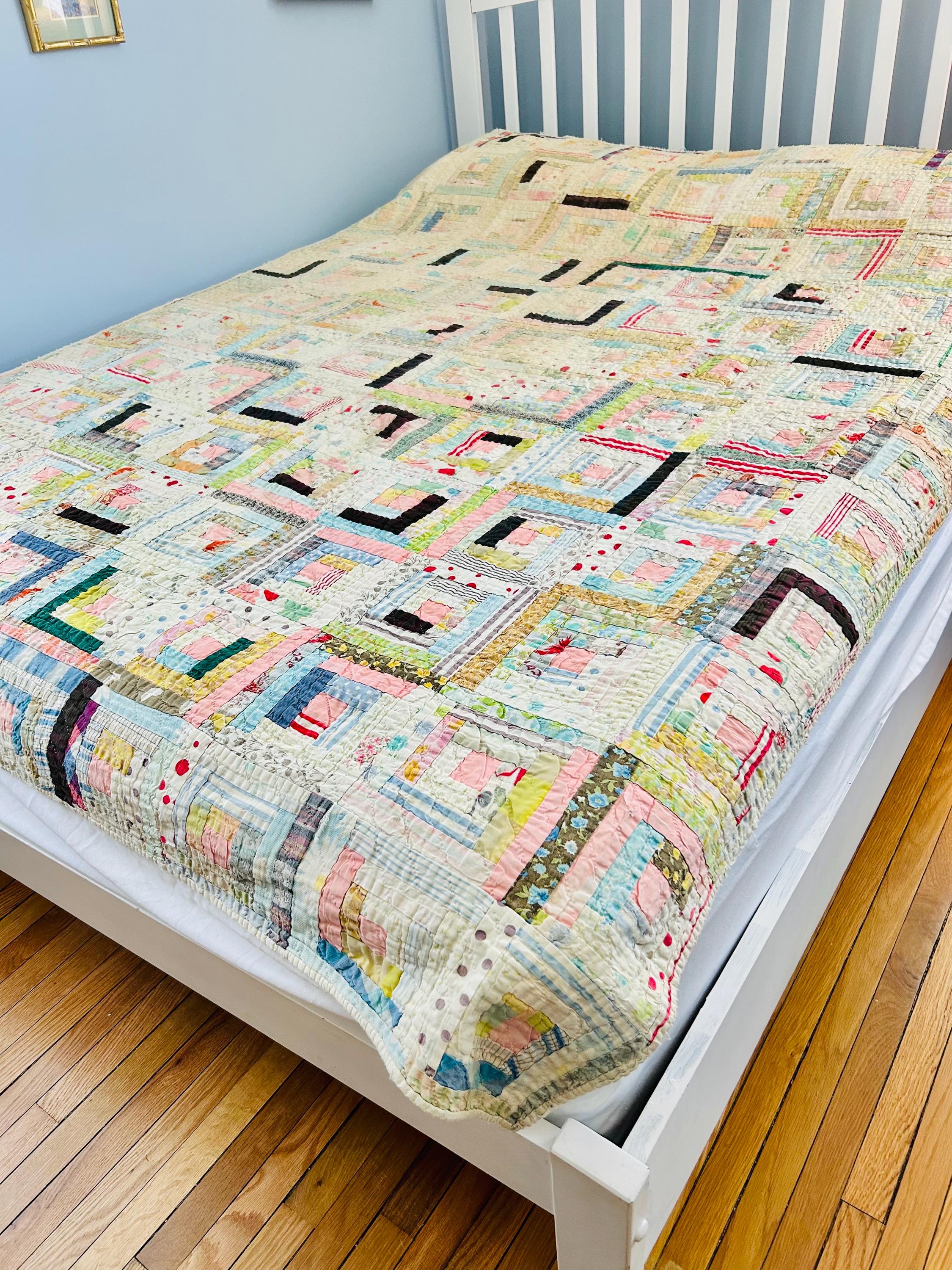
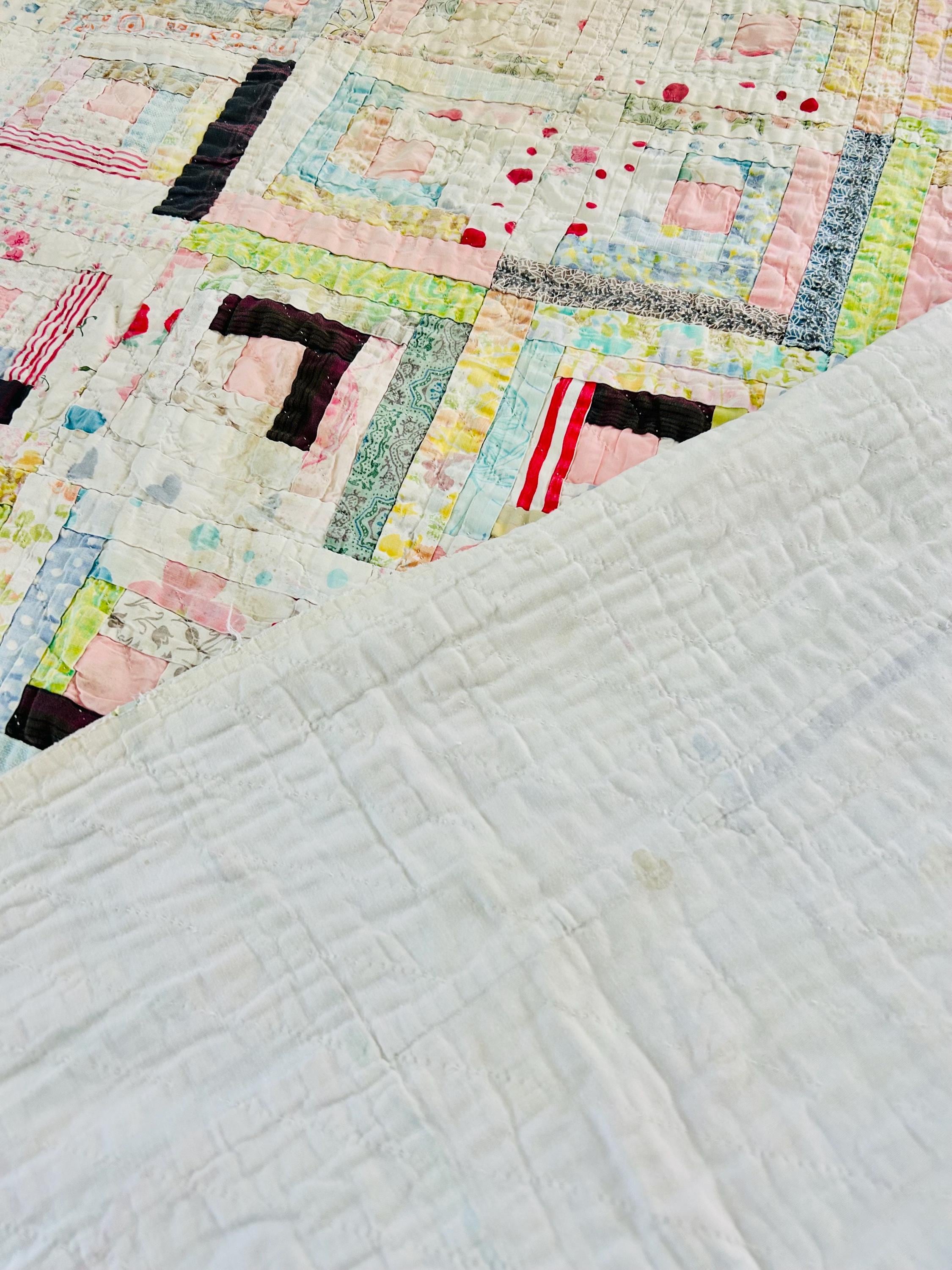
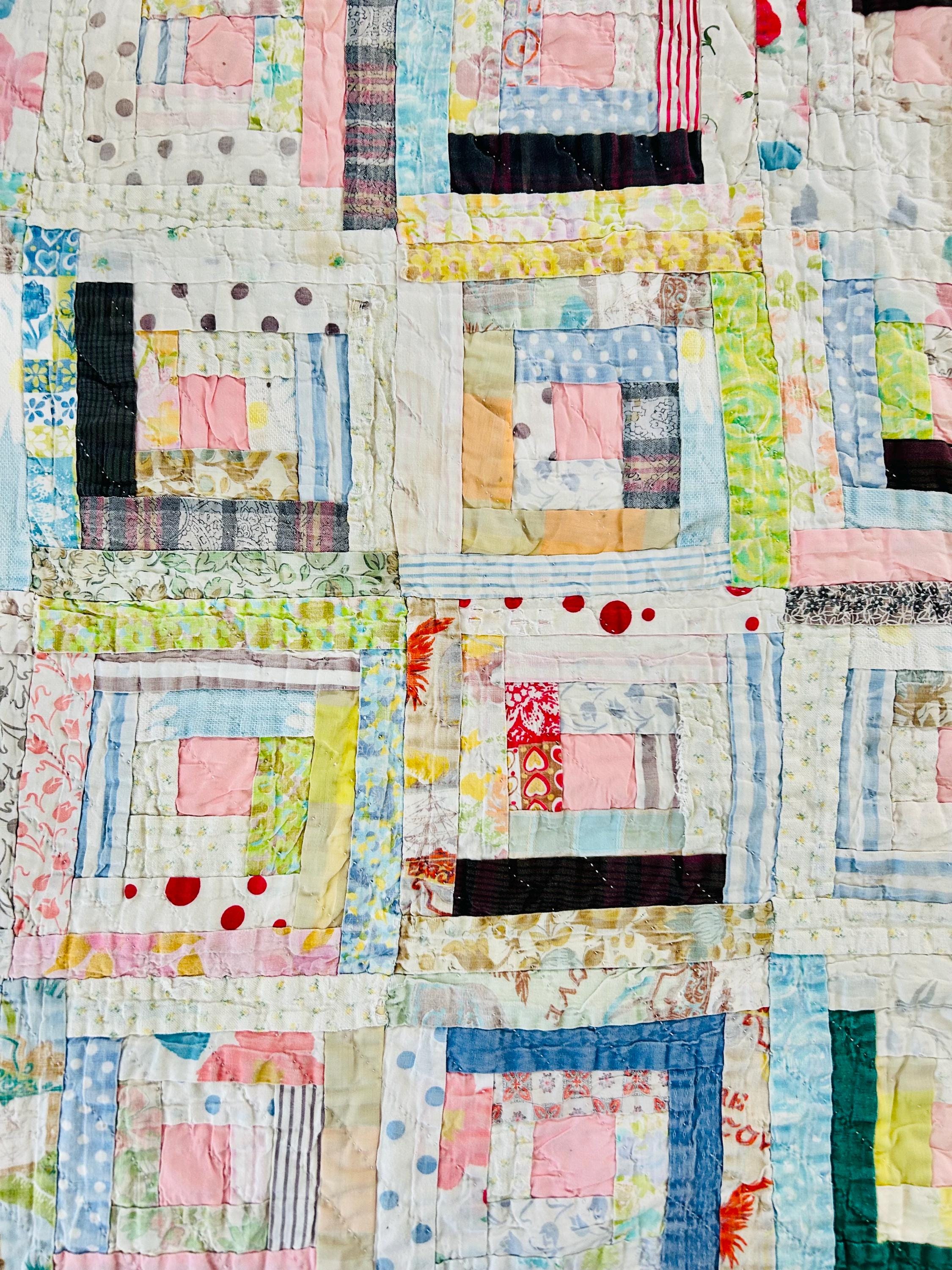
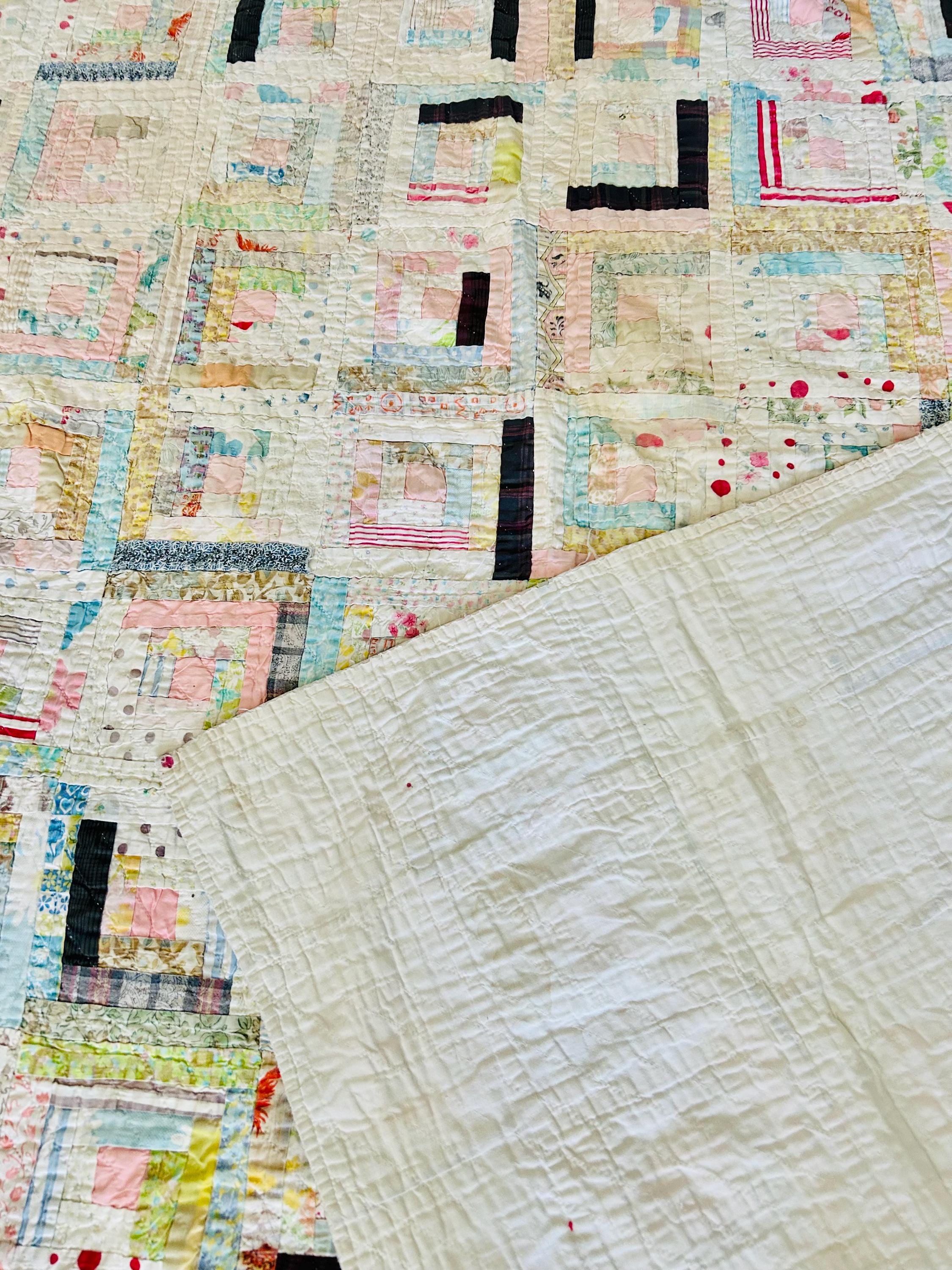
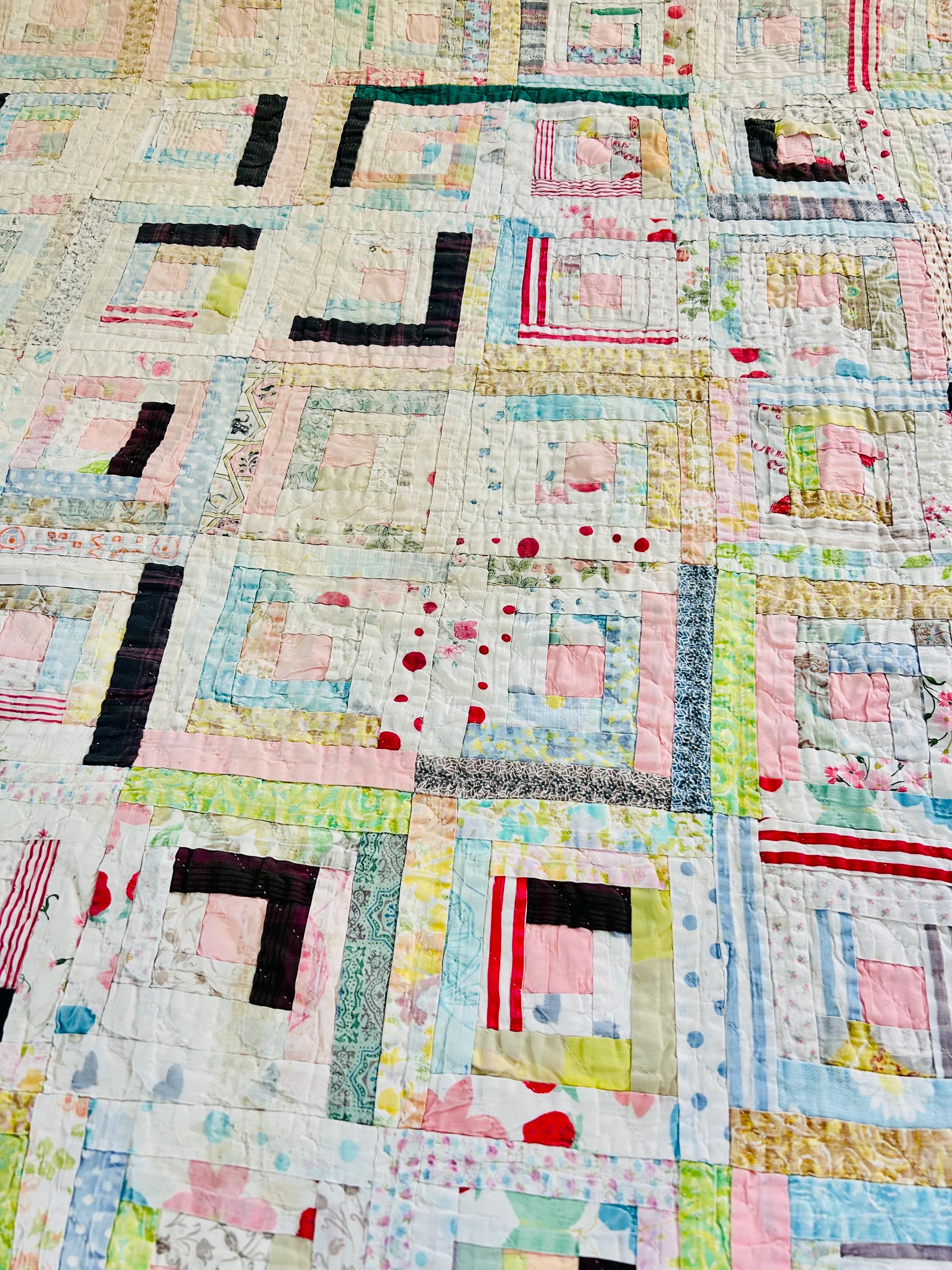
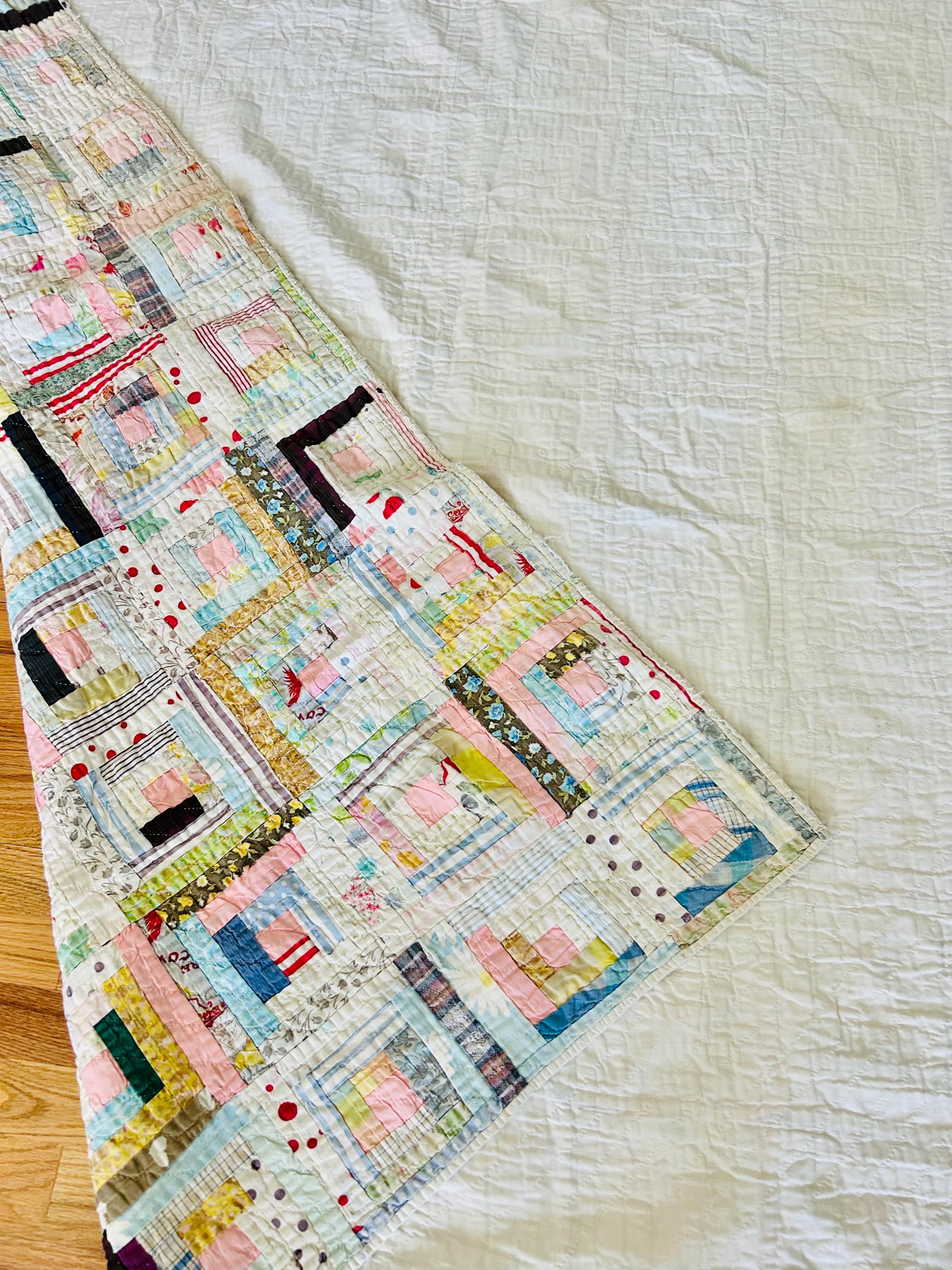
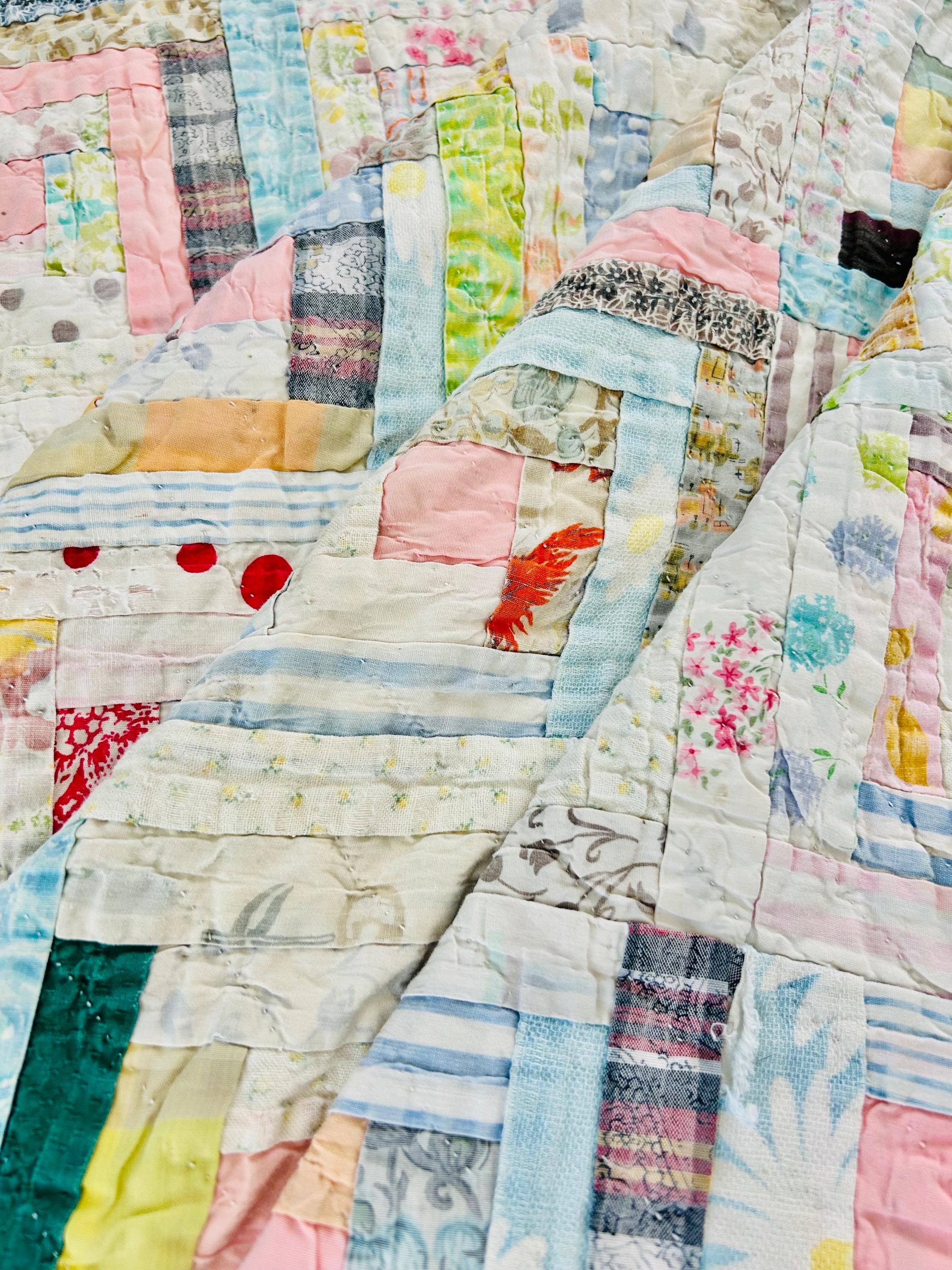
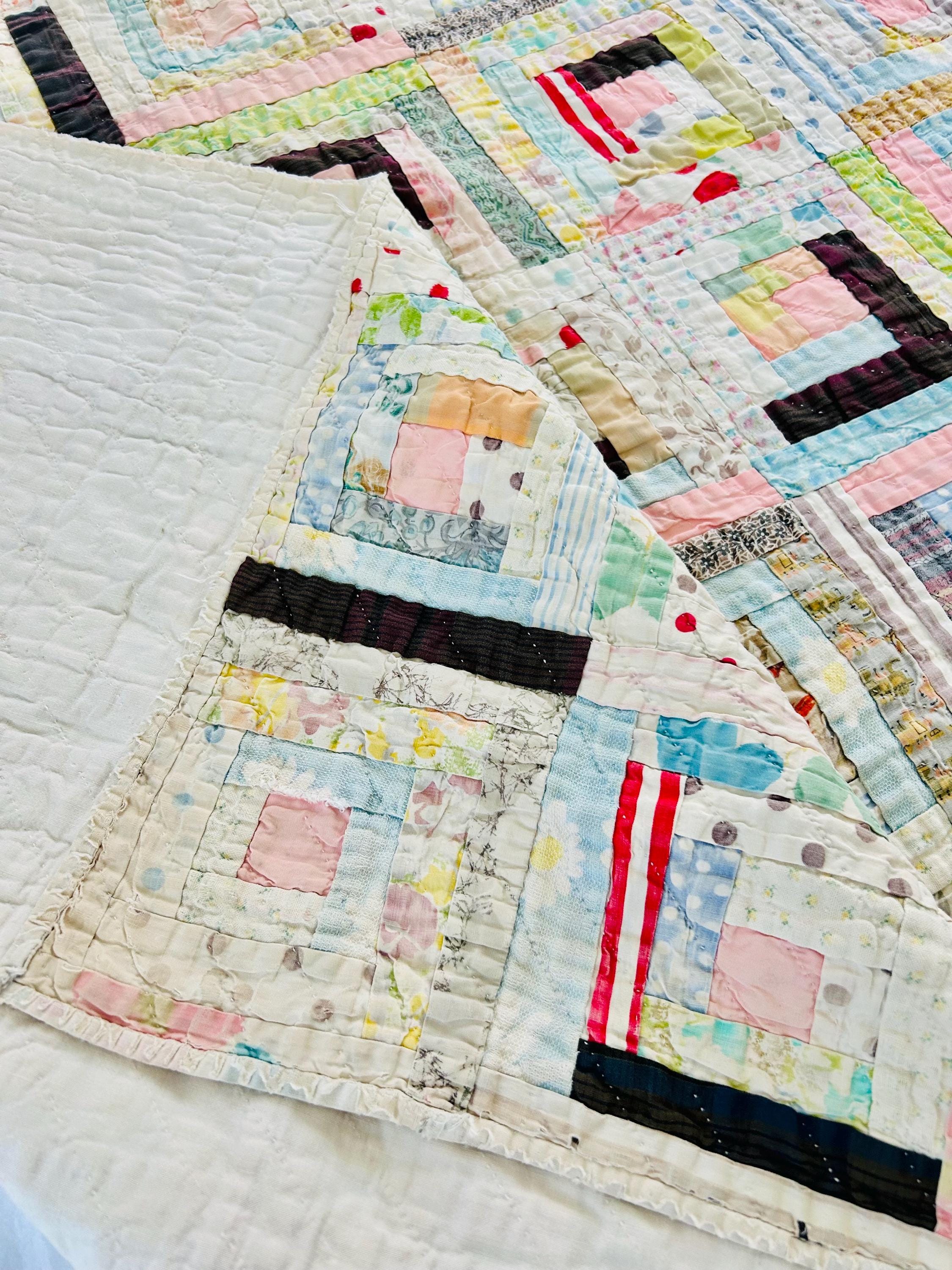
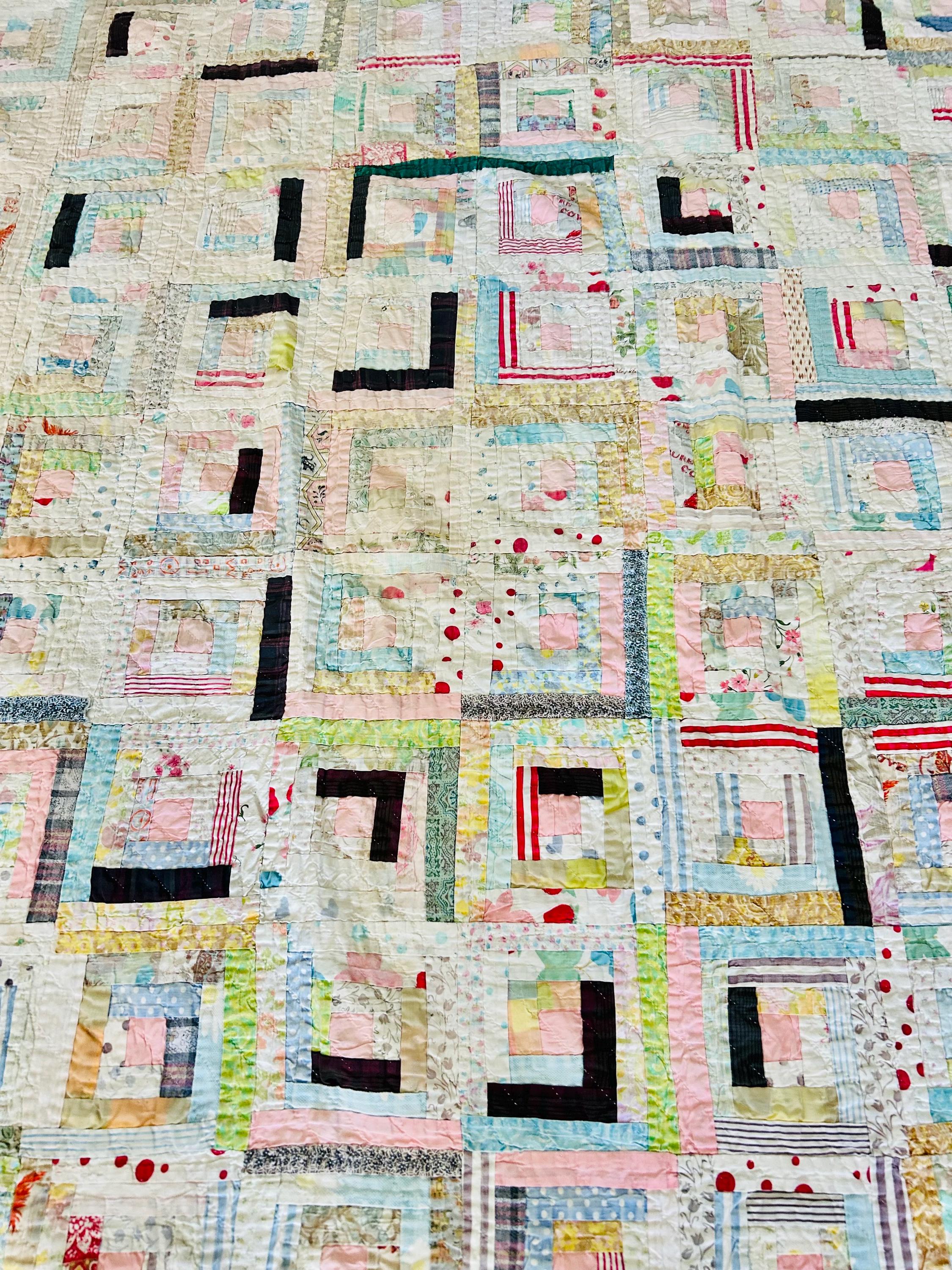
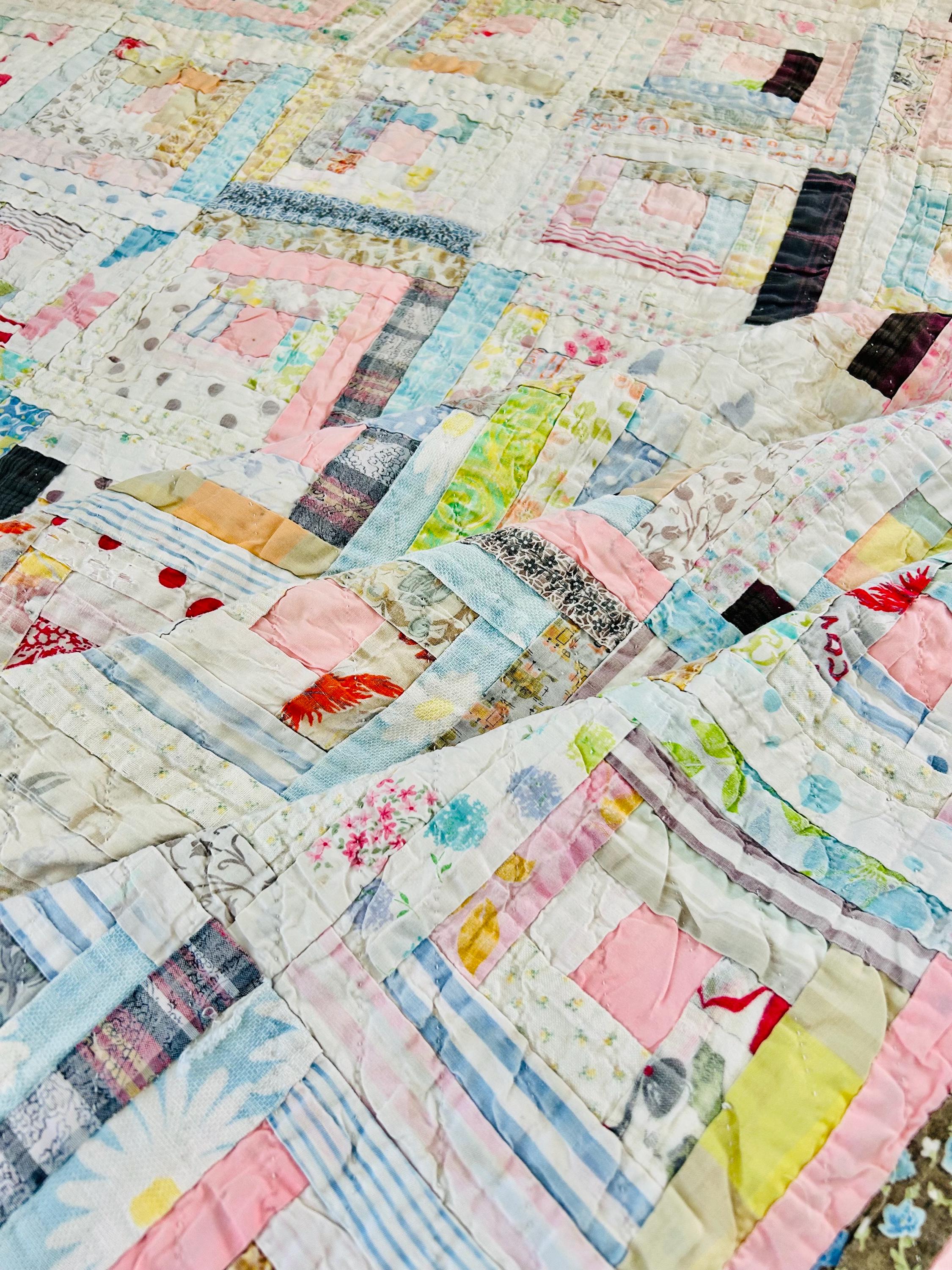
DetailsSoftly faded and beautifully timeworn, this Log Cabin quilt was made in a Barn Raising arrangement from an assortment of Depression-era and wartime fabrics, many of them pastel pinks and blues. The fabrics include prints, florals, stripes, dots, and scrap cottons in pale pink, aqua, butter yellow, soft green, red, and black. The piecing and age-related fading of some of the fabrics give it a wonderful primitive folk art quality.
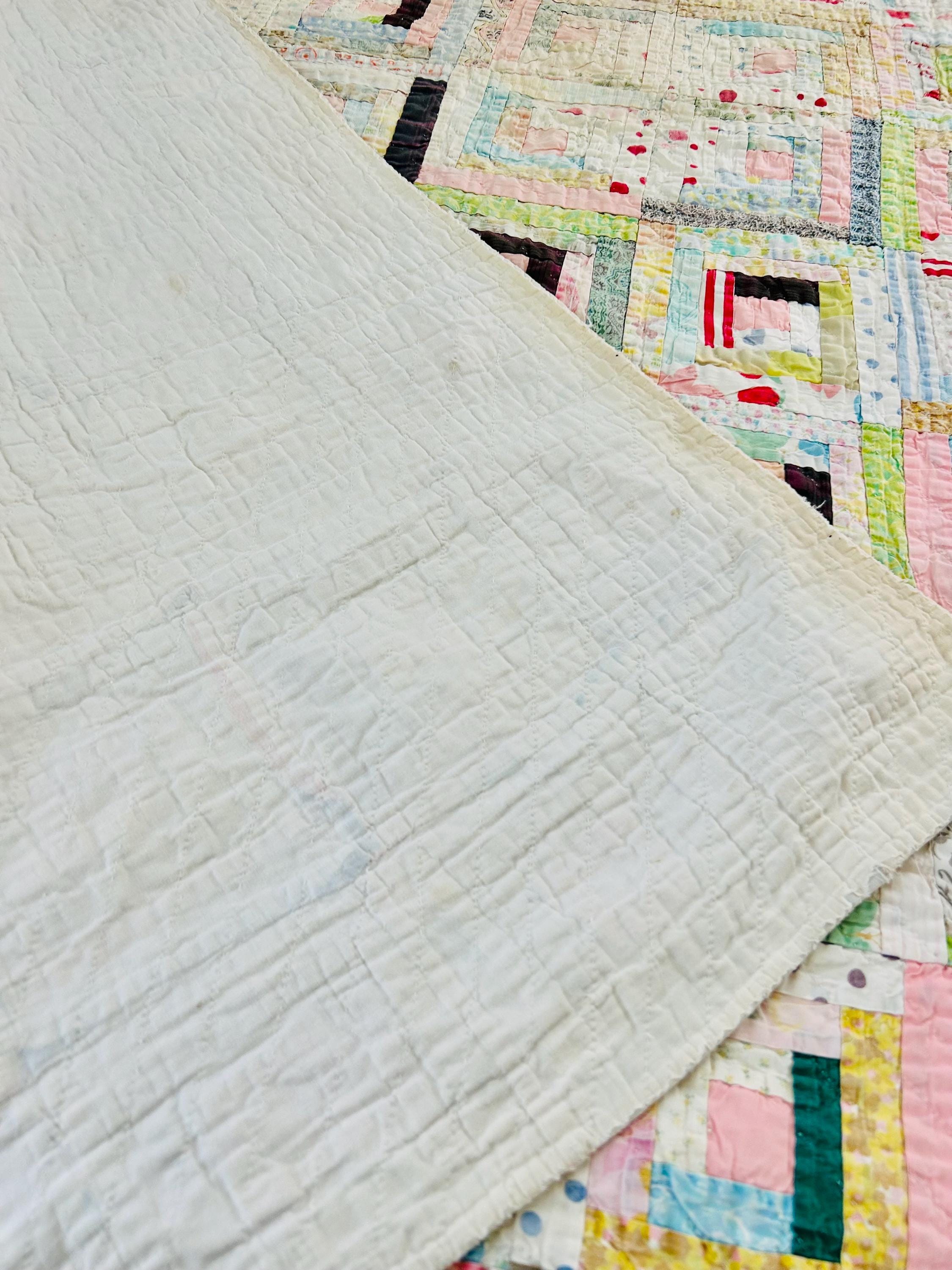
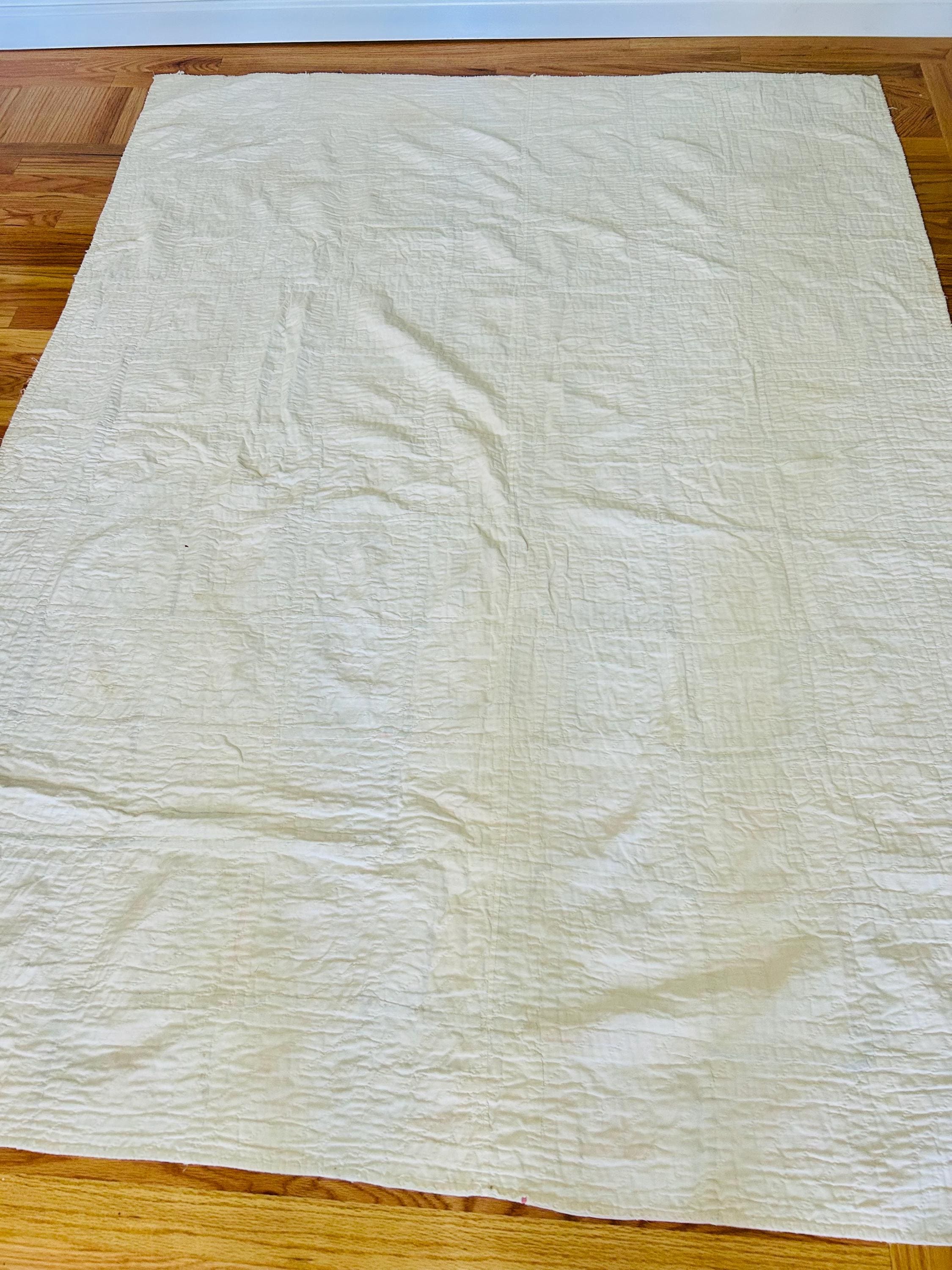
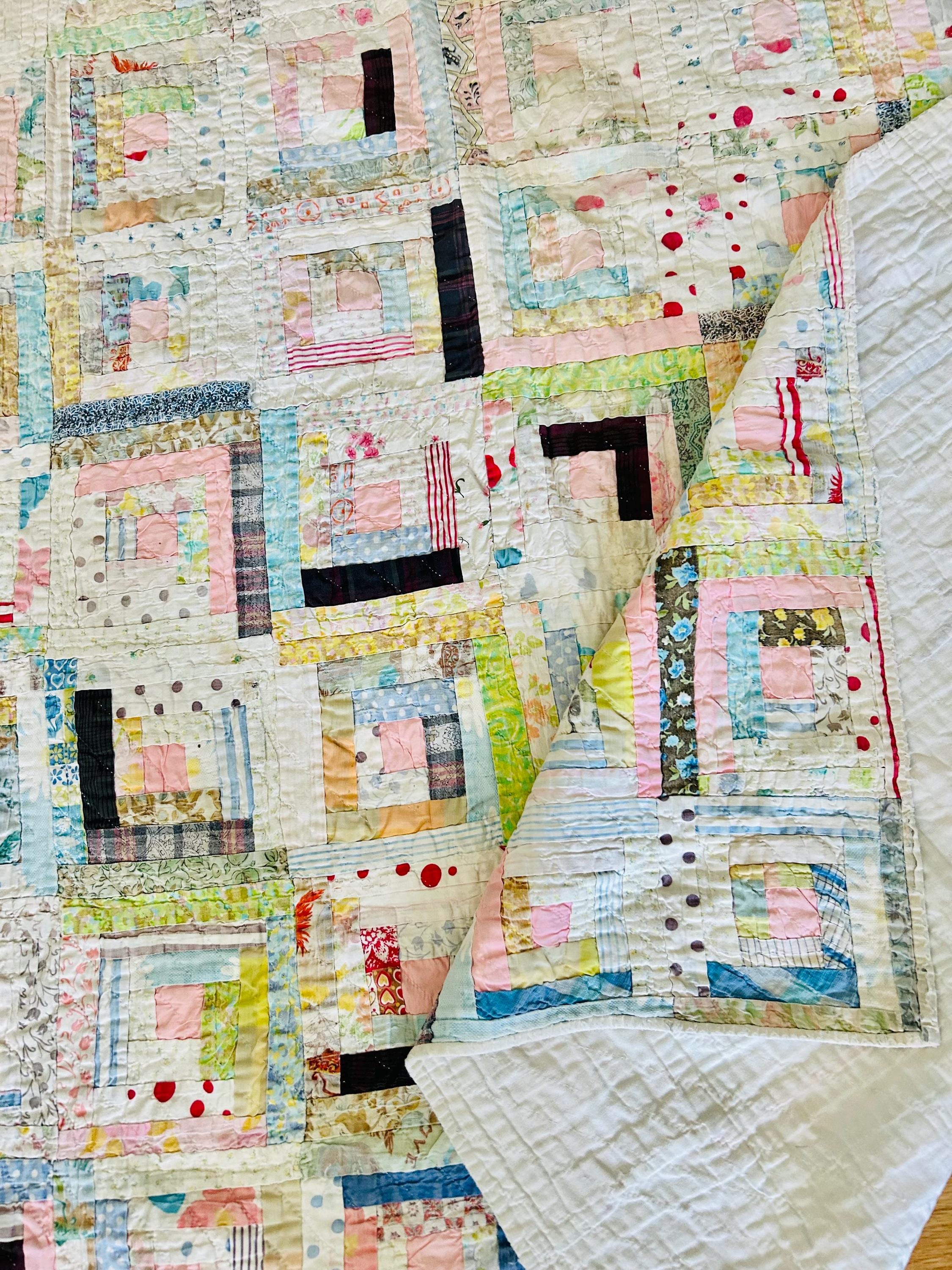
Entirely hand pieced and hand quilted, the hand quilting is in an all over diagonal grid pattern throughout the quilt. The back is off white cotton that has been turned to the front and hand-stitched to form the binding. The front of the quilt appears to have been foundation-pieced onto muslin blocks, but besides that thin muslin layer there is no batting.
CONDITION: The quilt is in good condition and remains sturdy and beautiful but does have limited fabric loss, fraying of the binding and fading of the fabrics. See photos.
Details
* Pattern: Log Cabin / Barn Raising variation
* Era: late 1930s–1940s
* Size: 60” x 80”
* Materials: cotton scrap fabrics with solid off-white cotton backing
* Construction: hand pieced and hand quilted
* Colors: pastel pink, aqua, pale yellow, soft green, red, black, cream, and white
* Backing: plain light cotton backing
* Quilting: hand quilted in allover diagonal grid
The quilt comes from a smoke-free, pet-free home and is pictured on a queen-size bed.
Condition
This quilt is in well-loved antique condition with visible age and wear throughout. There is fabric loss, thinning, scattered wear, fading, and areas of fragility consistent with a heavily used Depression-era utility quilt. Please examine photos carefully.
Despite the wear, the quilt retains exceptional visual character and displays beautifully as a piece of textile folk art. It would be wonderful draped over a ladder, displayed on a wall, layered in a farmhouse interior, or used carefully as a decorative textile.
This is an authentic survivor quilt with all the warmth, softness, and history that collectors of early American textiles love -
Shipping & Policies
Related Products